
Blog/Business security
Business Lock Problems in Dallas: Why You Should Never Force a Stuck Lock
The problem I see most at businesses, why Texas weather makes doors fight their locks, and the early signs that tell you to call before something breaks.
- Most common problem: a key forced in a stuck lock snaps inside
- Common cause in Texas: the building shifts, so the door no longer lines up with its lock
- Rule number one: don’t force it
- If it’s getting harder to lock or unlock: call a professional early
Fixing a stiff lock early usually costs a lot less than an emergency call for a broken key.
At businesses, the call I get the most isn’t a fancy security upgrade. It’s a broken key. Someone tried to lock up or open in the morning, the lock felt stuck, they pushed harder, and the key snapped in half inside the lock. Now the door won’t open or won’t lock, and the business is stuck too.
The good news is that most of these calls are avoidable. Here’s what I see and what I recommend to every business owner.
The problem I see most: a key snapped inside the lock
It almost always starts the same way. The lock gets a little stiff. The owner or an employee keeps using it, and every week it takes a bit more effort. Then one day someone forces it, and the key breaks.
At that point we have to extract the broken piece, and then fix the real problem that made the lock stiff in the first place. Otherwise it just happens again.
Why commercial doors start to fight their locks in Texas
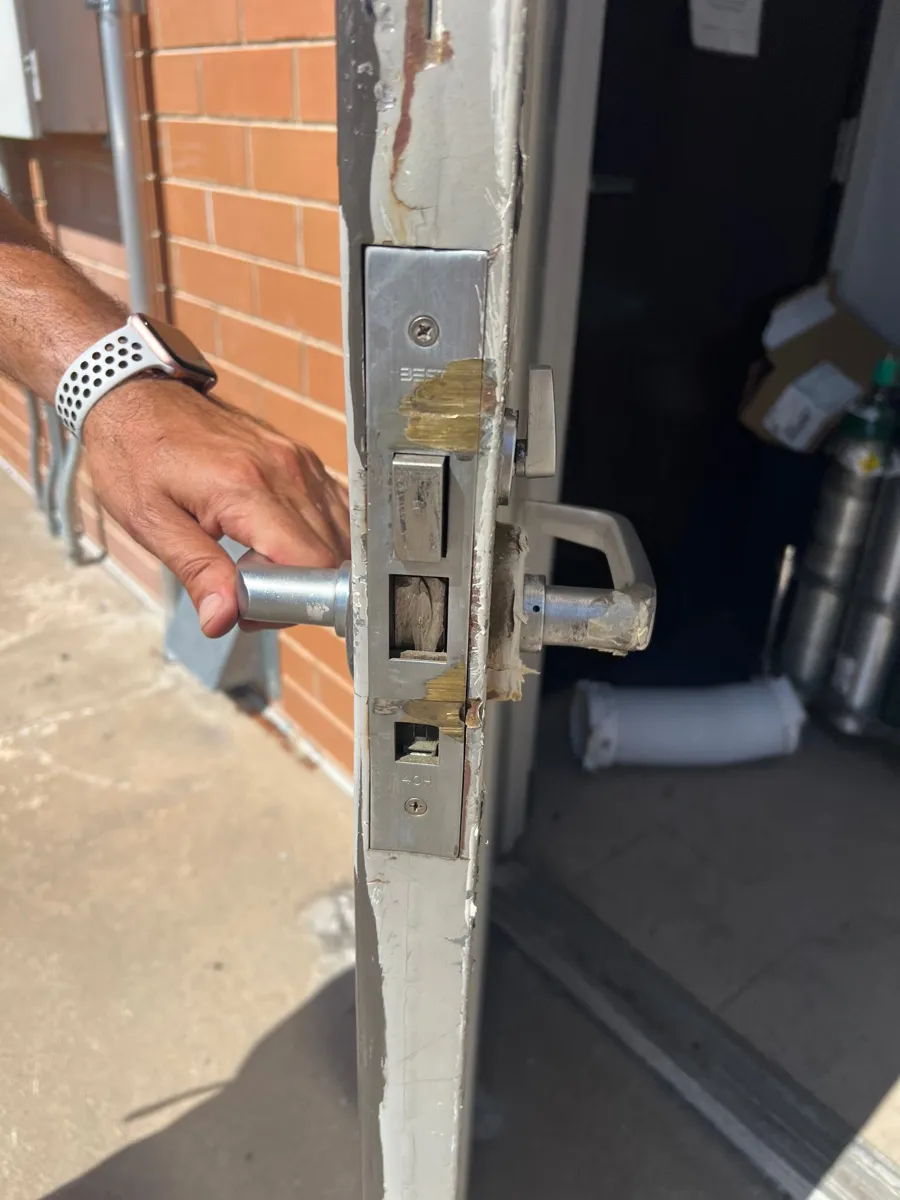
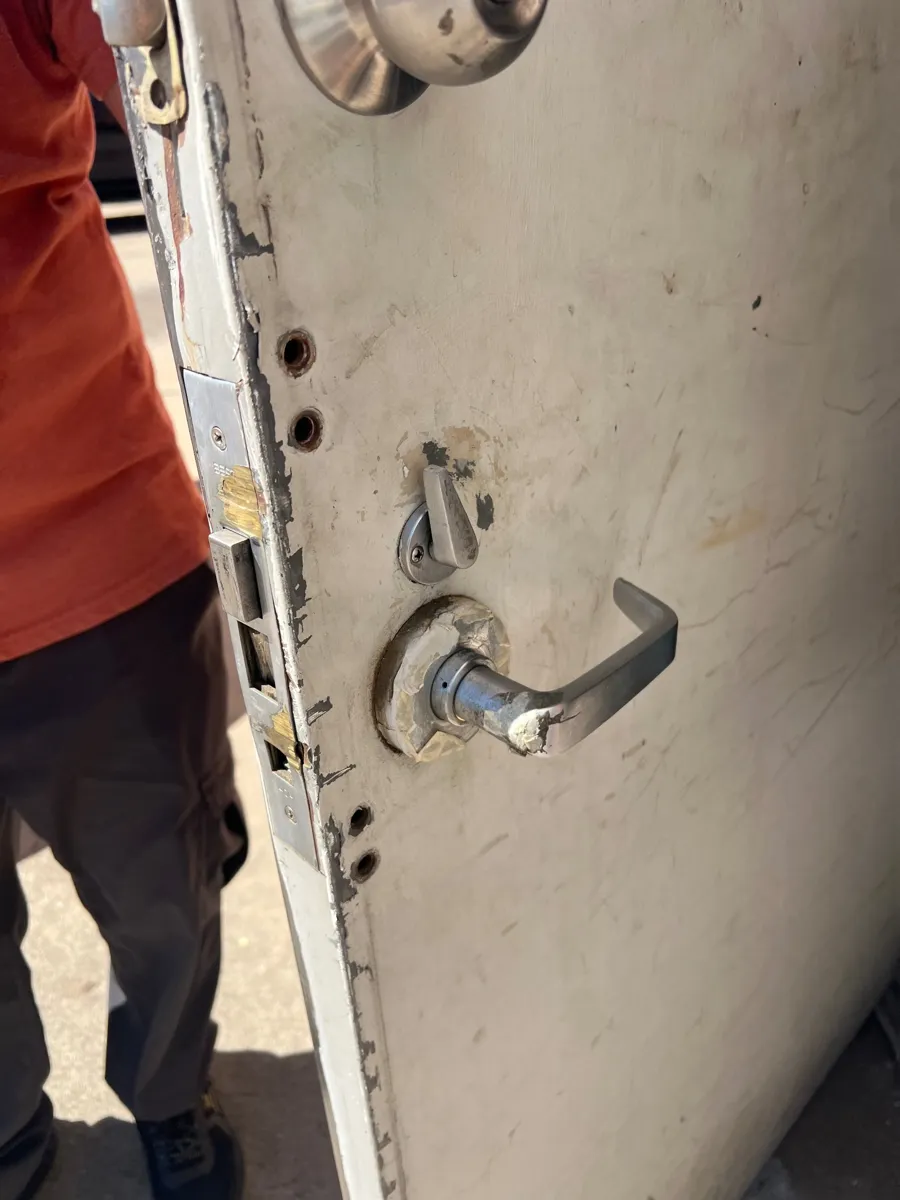
Sometimes the lock feels stiff, or the door just won’t lock. In Texas, a common reason is the building itself. Heat and cold, and the soil going from wet to dry and back again, can shift a foundation. When the building moves, even a little, the door no longer lines up perfectly with the frame.
Then the bolt or latch rubs against the strike plate, or doesn’t reach it at all. People think the lock is broken, but often the lock is fine. It’s the alignment that changed.
A simple check: with the door open, try the key or the thumb turn. If it turns easily with the door open but fights you when the door is closed, the problem is most likely alignment, not the lock.
Rule number one: don’t force it
If your lock feels stiff, or it’s been getting harder and harder to lock or unlock over time, stop forcing it. Forcing it is exactly how keys break, and how small problems turn into bigger and more expensive ones.
Early signs it’s time to call
- The key feels stiff or you have to wiggle it
- It’s harder to lock or unlock than it used to be
- You have to push, pull or lift the door to get it to lock
- The door doesn’t latch on its own anymore
- A key is bent or worn down
Any one of these is a good reason to have the door checked while it’s still a simple job.
What we fix for businesses
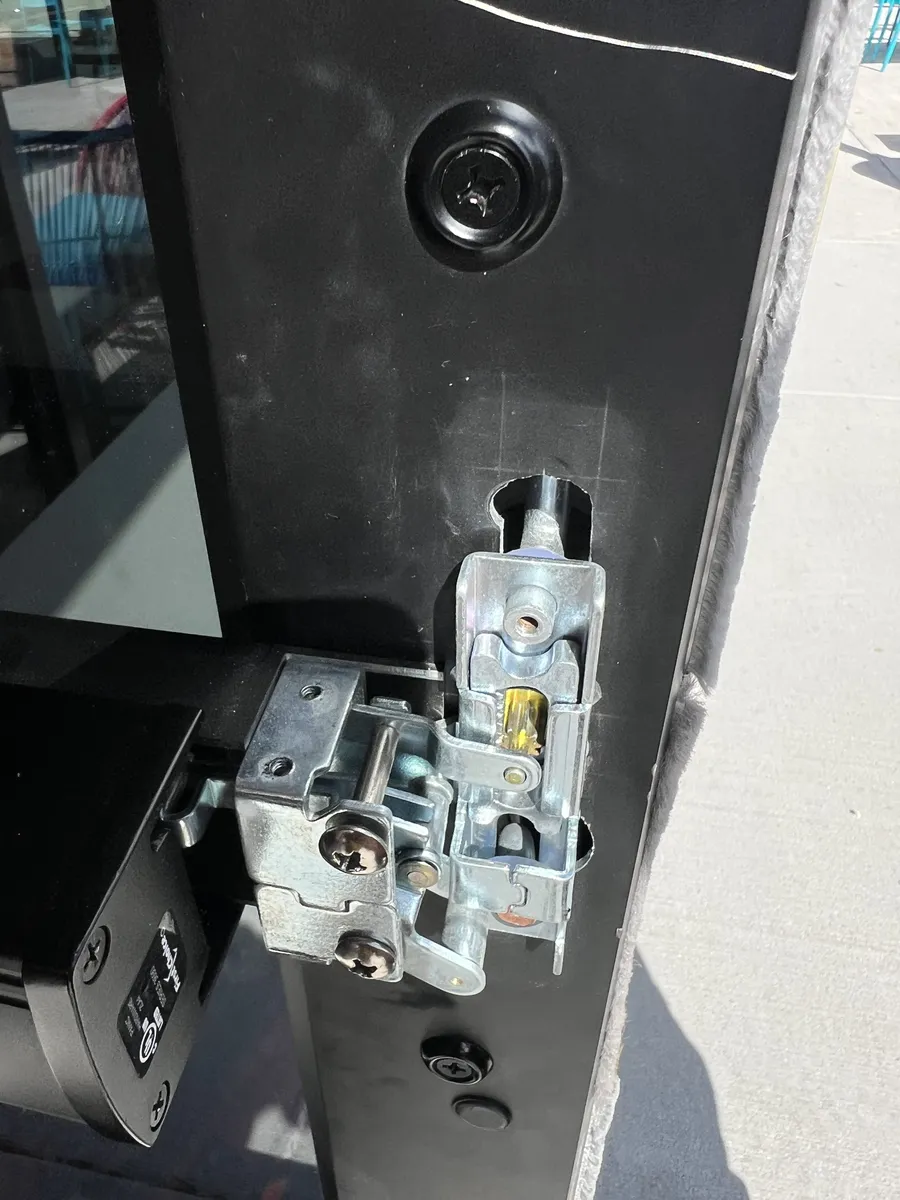
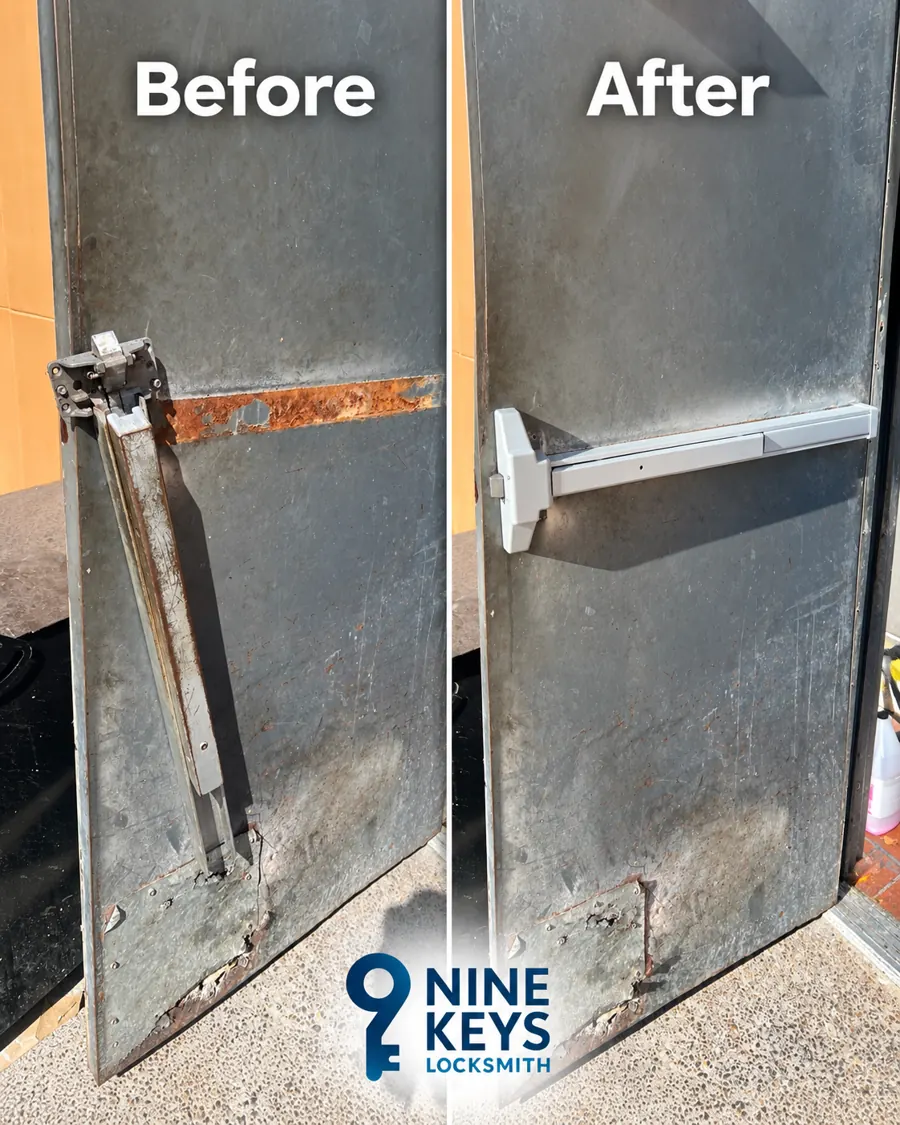
From storefront locks and lever handles to exit push bars on back doors, we work on the locks that keep a business running. Here’s a push bar we replaced on a commercial back door.
See all our commercial locksmith services, or commercial locksmith service in Dallas.
Common questions
What should I do if my key breaks in a commercial lock?
Don’t try to dig it out with tools, because that can push it deeper or damage the lock. Call a locksmith to extract the broken piece and fix the cause, so it doesn’t happen again.
Why is my business door suddenly hard to lock?
In Texas, a common cause is foundation movement from heat, cold and changes in soil moisture. The door shifts and no longer lines up with the lock. Often the lock itself is fine and the alignment needs fixing.
Is it OK to force a stiff lock?
No. Forcing a stiff lock is the most common way keys break inside. If it’s getting harder to lock or unlock, have it checked early.
How can I tell if the problem is the lock or the door?
With the door open, try the key or thumb turn. If it turns easily open but fights you when the door is closed, the door is likely out of alignment.